
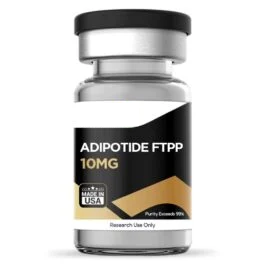
Adipotide (FTPP) (10mg)
$74.10
Size: 10mg
Contents: Adipotide (FTPP) (10mg)
Form: Lyophilized powder
Purity: >99%
SKU: P-ADIPOTID-10
FREE Shipping on $200+ orders
Adipotide (FTPP) is a synthetic research peptide studied for its interaction with adipose tissue vasculature and cellular apoptosis pathways. It is widely used in metabolic and fat-cell research models exploring energy regulation and lipid metabolism.
Buy Adipotide Peptide (FTPP) – Research Use Only
Overview
Buy Adipotide Peptide (FTPP), also known as Fat-Targeted Proapoptotic Peptide, is a synthetic research compound designed to interact with vascular structures associated with white adipose tissue. It is engineered from a targeting sequence linked to a proapoptotic fragment, creating a hybrid molecule studied for its selective binding properties and downstream cellular effects in laboratory models.
Early research has focused on its interaction with proteins expressed on adipose tissue vasculature, particularly prohibitin (PHB1), which is considered a potential surface marker involved in metabolic and transport regulation. Because of this targeting behavior, Adipotide is also referred to as a prohibitin-targeting peptide (Prohibitin-TP01).
Chemical Profile
- Molecular Formula: C152H252N44O42
- Molecular Weight: 2611.41 g/mol
- Other Names: FTPP, Fat-Targeted Proapoptotic Peptide, Prohibitin-TP01
Mechanism of Action (Research-Based)
Adipotide is designed with a dual-functional structure:
- A targeting sequence that binds to receptors associated with white adipose tissue vasculature
- A proapoptotic fragment (D(KLAKLAK)₂) that is believed to disrupt mitochondrial integrity once internalized
In laboratory models, this combination has been proposed to:
- Bind selectively to adipose-associated vascular markers
- Disrupt endothelial and cellular function in targeted tissue
- Trigger apoptosis in vascular structures supplying adipose tissue
Researchers suggest that this mechanism may indirectly reduce nutrient and fatty acid delivery to adipocytes, leading to observable changes in adipose tissue metabolism in experimental systems.
Key Adipotide Research Peptide Insights
Adipose Tissue Targeting
Adipotide Research Peptide has been studied for its affinity toward proteins expressed in white adipose tissue vasculature, including:
- Prohibitin (PHB1)
- Annexin A2 (ANX2)
- CD36-associated complexes
These proteins are believed to play roles in fatty acid transport and vascular signaling within adipose tissue.
Metabolic Pathway Research
Experimental models suggest that Adipotide may influence:
- Fatty acid transport dynamics
- Mitochondrial metabolic activity
- White adipose tissue energy utilization pathways
Changes observed in research include shifts in lipid metabolism markers and mitochondrial function-related gene expression.
Glucose & Insulin-Related Findings
In preclinical studies using obese animal models, Adipotide exposure has been associated with:
- Improved glucose tolerance
- Changes in insulin response markers
- Alterations in triglyceride levels
These effects appear to occur alongside rapid metabolic shifts in adipose tissue rather than gradual weight change alone, suggesting a complex mechanism beyond simple caloric reduction.
Cancer & Vascular Research Context
Initial investigations explored Adipotide’s ability to target tumor-associated vasculature due to similarities between cancer and adipose tissue blood vessel markers. While this direction provided early insight into its targeting potential, later studies shifted focus toward metabolic and adipose-specific pathways.
Why Study Adipotide Research Peptide here
- Selective targeting of adipose-associated vasculature
- Dual-action structure combining targeting + proapoptotic function
- Investigated in metabolic, vascular, and oncology models
- Observed effects on lipid and glucose metabolism in preclinical studies
Important Notice
Adipotide Research Peptide is supplied strictly for laboratory research purposes only. It is not intended for human or veterinary use, diagnosis, or treatment.
Adipotide remains a highly studied compound in metabolic research due to its unique ability to target adipose tissue vasculature and influence cellular pathways linked to energy regulation. It is widely used in experimental models exploring obesity, lipid metabolism, and vascular biology.
Related products

Anti-Aging & Skin Peptides
Anti-Aging & Skin Peptides
Muscle Growth & Performance Peptides
Anti-Aging & Skin Peptides
Healing & Recovery Peptides
Anti-Aging & Skin Peptides
Muscle Growth & Performance Peptides
Anti-Aging & Skin Peptides