Buy Lipopeptide (Pal-GQPR) Online – Research Peptide
Overview
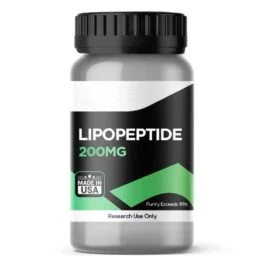
Buy Lipopeptide (Pal-GQPR) Online, also known as Pal-GQPR (Palmitoyl Gly-Gln-Pro-Arg), is a synthetic peptide fragment derived from immunoglobulin G (IgG), an antibody naturally involved in immune regulation and inflammatory signaling.
Through palmitoylation (fatty acid attachment), this peptide gains improved lipophilicity, which may enhance its ability to interact with lipid-rich biological membranes in experimental skin models. This modification is believed to improve penetration behavior and overall bioavailability in topical research applications.
Researchers commonly study and Buy Lipopeptide (Pal-GQPR) Online for its role in skin structure modulation, inflammation pathways, and extracellular matrix (ECM) support.
Chemical Profile
- Molecular Formula: C38H68N6O8
- Molecular Weight: 736.9 g/mol
- Sequence: Pal-Gly-Gln-Pro-Arg
- Also Known As: Pal-GQPR, Palmitoyl Tetrapeptide-7/3, IgG-derived peptide fragment
Mechanism of Research Interest
Lipopeptide is primarily studied for its potential effects on:
- Extracellular matrix remodeling
- Inflammatory signaling regulation
- Skin barrier structural integrity
- Dermal protein expression pathways
The IgG-derived structure has made it a point of interest in studies exploring immune-linked skin responses and tissue repair mechanisms.
Key Research Findings
1. Skin Structure & Extracellular Matrix Support
Experimental studies suggest Lipopeptide may contribute to improved dermal architecture by influencing key structural components such as:
- Laminin IV & V (basement membrane stability)
- Collagen VII (dermal-epidermal anchoring fibers)
- Fibroblast-related matrix proteins
These components are essential for maintaining skin firmness, elasticity, and structural cohesion.
Some research also indicates potential modulation of IL-6, a cytokine involved in inflammatory skin responses, particularly after environmental stress such as UV exposure.
2. Anti-Inflammatory & Skin Conditioning Activity
Preliminary findings suggest Lipopeptide may assist in reducing inflammatory signaling in skin models, potentially contributing to:
- Reduced irritation markers
- Improved skin resilience
- Support for post-exposure recovery processes
Because of this profile, it is frequently studied in formulations targeting skin aging and barrier repair mechanisms.
3. Photoaged Skin Research
In controlled experimental settings involving photoaged skin models, Lipopeptide has been associated with:
- Increased fibrillin-1 deposition (a dermal repair marker)
- Improved structural density in the papillary dermis
- Gradual improvement in wrinkle appearance over extended study periods
Long-term observations suggest stronger effects over time, particularly when compared to placebo formulations.
4. Dermal Repair Biomarkers
Studies have highlighted fibrillin-1 as a key indicator of dermal remodeling. Lipopeptide exposure has been linked to increased fibrillin-1 presence, suggesting potential involvement in:
- Dermal regeneration pathways
- Extracellular matrix reinforcement
- Structural recovery in aging skin models
Why Researchers Use Lipopeptide
- IgG-derived peptide fragment with immune relevance
- Palmitoylated for improved membrane interaction
- Studied for ECM remodeling potential
- Investigated in anti-aging and photoaging models
- Common in advanced dermatological research formulations
Important Note Before You Buy Lipopeptide (Pal-GQPR) Online
Buy Lipopeptide (Pal-GQPR) Online is strictly intended for laboratory and research use only. It is not approved for human or medical use.
Related products
Anti-Aging & Skin Peptides
Anti-Aging & Skin Peptides
Anti-Aging & Skin Peptides
Fat Loss & Metabolic Peptides
Anti-Aging & Skin Peptides
Longevity & Cellular Health
Anti-Aging & Skin Peptides
Anti-Aging & Skin Peptides